Wednesday, September 14, 2022

Male Duo: Jumba and Pleakley Part 3

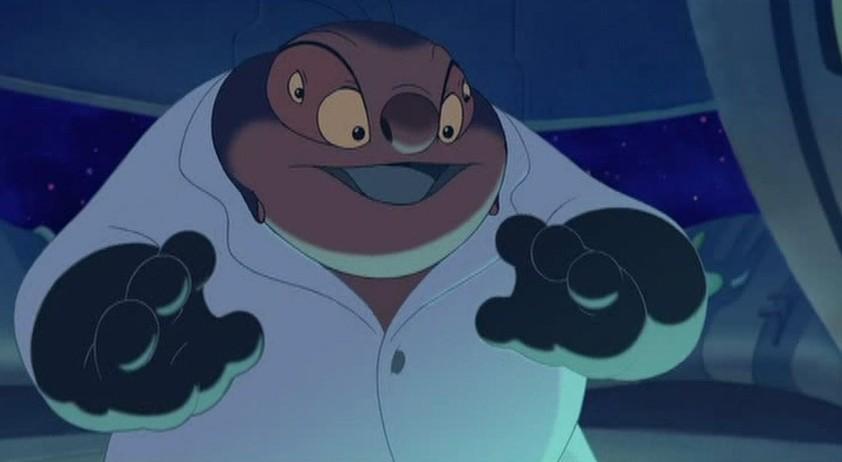
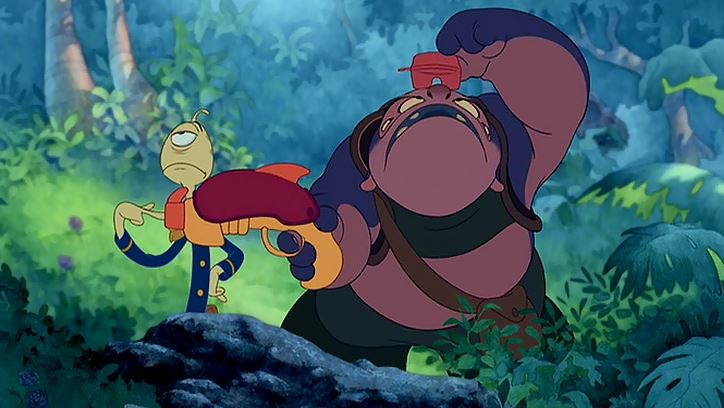
This is just a short wrap up post to talk about the other variations of these characters outside of the main canon. These spin-off shows vaguely tie-in to the original series, but make changes to the world/characters to fit the demographic these new series are targeting. 


Saturday, August 27, 2022

Study Summary: Gender Ratio in American Family Targeted Animation (2008-2012)

Year: 2008 - 2012
 Looking at only American, or American/Foreign Coproduced Animated Films Rated G or PG that were released in at least 500 theaters in the U.S.  

53 Movies Released

Disney and Gender

All Animated Feature Films (Dec 1937- Dec 2019)

 All theatrically released animated Disney feature films (released under Pixar Animation Studios, DisneyToon Studios, ImageMovers Digital, Skellington Productions, Walt Disney Animation, Walt Disney Television Animation), excluding films that included a lot of live action, straight to video films that had a limited theater or international premier only, shorts, Disney package films, and films not produced by Disney but distributed under the Disney label.  

Thursday, August 25, 2022

Judy Hopps and Royalty

Zootopia isn’t just a family-friendly police procedural with an anthropomorphic twist. It also deals with complicated issues of intersecting privilege and systemic prejudice in a way that is accessible to children. This dovetails nicely with its treatment of primary protagonist, Judy Hopps, a female character that stands out in a figurative sea of princesses.

To really understand what makes Judy Hopps so unique, it’s important to take a look at female primary protagonists in theatrical animation, particularly the royalty. There are relatively few female primary protagonists in American animation, and a large number of them have either been royals or women whose love interests are royals.

Including all mainstream Disney animated features theatrically released in the U.S., from Snow White and the Seven Dwarfs (1937) to Frozen 2 (2019), there have only been 19 films with a female primary protagonist. Comparatively there have been 64 films with a male primary protagonist, and 7 with male/female co-protagonists. 


Monday, May 8, 2017

Storks and The Dove Foundation

family approved Doe Foundation seal The Dove Foundation is a Christian based review site. It is a non-profit, that's mission is to: "promote the creation, production, distribution and consumption of wholesome family entertainment."

And yet what constitutes wholesome entertainment isn't clearly defined anywhere on their website. Their seals of approval include: family approved (all ages), family approved (for 12 and older), faith friendly, and faith based. 


While it seems that The Dove Foundation aspires to something of the Hayes code values, it's hard to know. The lack of clearly defined requirements for what is considered "wholesome" gives some freedom for the site to be vague about their own values. For instant in their review of Love Free or Die (2013):

Thursday, October 27, 2016

The Lion Guard - Timon and Pumbaa - Bunga's Uncles


Timon and Pumbaa are back in Disney Junior's newest addition to the Lion King universe: The Lion Guard. They are still a part of Simba's family, and have adopted a new kid; a honey badger named Bunga. I can't say this show is particularly... of substance, but it's nice to see the Lion King's "two uncles" are still together and going strong.


Friday, August 26, 2016

Ever After High: Lesbian Princess


For those who have yet to watch Dragon Games, this happened:


Wednesday, June 8, 2016

Zootopia's Judy Hopps Reblog

An article I've been working on just went up today over at the Animation World Network. It was so wonderful working with Dan Sarto again. He really helped narrow my idea, and I'm so pleased with how it turned out. Check it out HERE. The article is about gender in animation, and looking at what makes the primary protagonist in Zootopia so unique.


Tuesday, March 29, 2016

Disney Gender All Theatrical Animation


      All American animated theatrically released Disney films (released under Pixar Animation Studios, DisneyToon Studios, ImageMovers Digital, Skellington Productions, Walt Disney Animation, Walt Disney Television Animation), excluding films that included live action, straight to video films that had a single theater or international premier only, shorts, Disney package films, and films not produced by Disney but distributed under the Disney label. 

All Gender 1993-2012

This study looks at the gender break down of primary protagonists in family-targeting American animated films from 1993-2012. Including all G or PG-rated American (or American co-produced) animated theatrical releases that were released to at least 500 theaters and were primarily animated (there could be live action scenes, but focus was on animated characters in an animated world). Excluding package films.

151 films (percents rounded)

4 male and female co-protagonists (3%)
23 female primary protagonists (15%)
124 male primary protagonists (82%)

Thursday, February 18, 2016

Male Duo: Jumba and Pleakley (part the second)


Double Coding


It might seem like I am tossing in a ton of examples in the following, but I actually had to cut down to make this readable. These are some of the more prominent examples. Check out part one for some video examples.


Pleakley-

The franchise has consistently shown that Pleakley likes dressing as a woman not just because it is a part of his disguise, and that he has insecurities over this (particularly at the start of the franchise). He clearly think that this might not be considered socially acceptable behavior for an earth male, it seems not to be for his species (Season 1, Episode 14). He will quickly justify his love of female clothing by reminding everyone that it is for his disguise.

For example, in Season 1, Episode 22 Pleakley wanders into a conversation that Lilo, Jumba and Stitch are having about one of the recent experiment cousins they are trying to find.

Pleakley is holding a pair of long dangling earrings.

"I can’t get these earrings to stay on. Has anyone seen the duct tape?" He asks.

Lilo, Jumba and Stitch all realize at the same time that because Pleakley has no ears, he will be perfect to help them catch the cousin. They all simply stare at Pleakley in silence. He becomes nervous about this, assuming the silence is them being judgmental about his want to wear earrings.

"What? I’m going to the store. It’s my disguise, remember?"

In Stitch! The Movie, Pleakley gets caught on the phone with the New You Wonder Girdle Company. (girdles are marketed as shapeware for women in the U.S, and the name winks at older audiences with it's reference to Wonderbra). Pleakley becomes flustered and unconvincingly denies having ordered a girdle (since it's an undergarment for women... why would he need that for his disguise). This movie also shows a conversation between Nani and David, in which Nani confides that she believes Pleakley has been secretly trying on her clothing (he has).


Pleakley is presented as effeminate in a way that can easily be read as queer, similar to the "sissy*" coded characters that have shown up since early Hollywood days (Who's a Sissy? homosexuality according to Tinseltown). *But thankfully Pleakley is not considered a joke because of his nature, jokes tend to have the punchline about his enthusiastic misunderstandings of human culture. He is also into fashion and in an alternate timeline episode is shown as being a very flamboyant world famous fashion designer (Season 2, Episode 6).


Pleakley sitting on Gantu's lap, throwing shade.
Pleakley clearly enjoys his disguise, and enjoys playing the part of wife to Jumba.

In Season 1, Episode 25, Nani, Lilo's older sister and guardian, is applying to a job at a rental supply shop. She ends up hosting her potential boss, Jameson, for dinner in order to show her aloha hospitality. The cousin of the episode is Nosy, a gossip who likes to tell everyone's secrets.


Trend setting Pleakley serving Bulletproof Coffee, before it was even invented.
Nani introduces Jameson to her family, including her Aunt Pleakley and Uncle Jumba. Pleakley is excited to get to try out his hosting skills. Predictably things go poorly, ending with Nosy revealing everyone's secrets. Nosy loudly proclaims that "Aunt" Pleakley is not a woman. Pleakley runs into the house upset, leaving everyone else to sit outside awkwardly. Jameson ends up offering Nani the job based on the fact that she must be a caring person to have such a diverse makeshift family.

Keoni, Jameson's son, talks to Lilo about Pleakley not being a woman, and then shrugs the whole thing off as not a big deal. However Pleakley personally identifies within the show, Keoni and his father would be left to naturally conclude that Pleakley is trans (or somewhere on the spectrum) and is in a relationship with Jumba, and everyone is fine with this.

Jumba- 


Jumba is more emotionally distant then Pleakley. Unlike Pleakley he has female love interests mentioned (well, two). He had a wife he divorced at some point before the franchise started. In an alternate timeline episode he mentioned having made himself a robot wife (Season 1, Episode 34), but this is also the timeline in which something terrible happened to Pleakley that Jumba won't talk about. Alternate timeline Jumba gives regular Jumba the advice to never built a robot wife, so presumably this doesn't ever happen in the real timeline.


Jumba and Pleakley's room (Jumba has top bunk)
His friendship with Pleakley is domestic, but at times dysfunctional. Jumba and Pleakley live together in a shared room, but sleep on bunk beds. In only one episode are they shown to have shared a bed (Season 1, Episode 8), when on vacation in a shared room with Lilo and Stitch. Pleakley does things like bringing Jumba his favorite meal when he is having a bad day (Season 1, Episode 19), but in this same episode Jumba threatens Pleakley if he tells Lilo or Stitch that he has created a new evil experiment.

Jumba takes pride in being an evil genius and, particularly at the start of the series, this can cause tension in his friendship with Pleakley.

Jumba and Pleakley-


In the first film they are forced together, and share a mutual dislike, bound together by circumstance.  Their overarching character development though the franchise is about their friendship, and building of an ohana (together).

In Season 1, Episode 14 we are introduced to Pleakley's family.


Lilo is woken up by Pleakley's phone going off in the middle of the night. Jumba explains that it is Pleakley's mother calling to try and pressure her son to find a wife.

Lilo is surprised, “A wife? Like a lady to marry?


Pleakley replies, “No.No. No. There will be no wife. NO LADY. And no marrying.” 'No lady' is said at a louder volume, and Pleakley pulls off his sleeping mask to emphasize this line, before snapping it back on and saying 'no marrying', in a less angry tone. “My earth studies are my life. I don’t have time for a relationship.” 

This entire episode reads, to use the fandom term, very slashy. But it is exchanges like this which are very interesting. Pleakley's emphasis on not wanting to marry a lady, and specifying the gender neutral "relationship" does give nods to a queer reading of this episode. This episode makes it clear that Pleakley's family wants him to always present male, and marry a woman. He doesn't want to.

Pleakley lies to his mother about already being engaged, and so his whole family shows up. He and Nani have a short lived fake engagement for his families sake, but when Nani finds out that their marriage will be legal, and that their vows would be eternal and galactically binding she bows out. Jumba takes her place, dressed as a woman. The marriage ceremony is interrupted just before they are pronounced man and (wife). Instead of being glad that he was saved from a legally binding marriage, Jumba yells, "You are interrupting climax of earth ceremony."


Leroy and Stitch concludes the series, tying up loose ends and finishing characters arcs. All of the cousins have been found, and in reward the Galactic Council gives Jumba back the key to his evil lab, and Pleakley is granted a position at a galactic community collage as a professor in Earth research. Lilo realizes that it would be selfish to ask her friends to continue to live with her family, and so she encourages them to pursue their dreams.So, Jumba, Pleakley, and Stitch all leave earth.

Back at his evil lab, Jumba creates an exploding saliva solution, and excitedly calls out to Pleakley to show him, only to remember that Pleakley isn't there. He then puts on a record (that Lilo gave him), that plays "I'm So Lonely I Could Cry" by Elvis Presley. A sad a montage of all the characters being lonely follows.

Later it cuts to Pleakley in his new office. He has two things on this desk, a framed photo of Jumba, and an earth rock that Lilo gifted him. Pleakley calls Jumba, bursting out with how much he misses him, and how he wants to see him. Jumba is pleased that Pleakley called, but doesn't want to continue the conversation because the evil Hamsterviel is in his lab. We then get this exchange:

Pleakley: "But don't you miss your Aunt Pleakley?"

Jumba (under duress from Hamsterviel, to hang up): "No."

Pleakley: "I'm wearing the wig."

Jumba: "No. Not coming back. Never coming back. Never wanting seeing you again."

Pleakley: "Yeah? Well, me neither. What I mean when I said: I miss you so much, can I visit? Was: I don't miss you at all, and I never ever wanna see you ever again, either."

Pleakley hangs up the phone and begins crying hysterically. Jumba is equally upset that Hamsterviel forced him to hurt Pleakley.

After apparently crying it out, the next thing Pleakley does is to fly to Jumba's lab. Unfortunately he shows up mid epic battle between Stitch and the baddies (which results in all the good guys being captured). Pleakley explains to Jumba that he just wanted to make up. To which Jumba affectionately replies, "Next time send flowers."

The movie ends with Jumba and Pleakley choosing each other as their ohana, and deciding to go back to Earth with Lilo and Stitch.

As I mentioned in part 1, there is no way to guarantee what the intent was by the creators behind all the elements of the franchise. Still, it seems unlikely that the consistent characterization of Jumba and Pleakley's relationship could have been written so carefully with no one involved realizing the possibility of a gay reading (particularly since so many jokes seem to rely on this second reading of the characters). To quote my favorite line of Provenzano when he described this type of ambiguity in Ren and Stimpy (Advocate, 1994, pg 56-58), Pleakley and Jumba are at the very least "Not NOT gay." 


1)"Evidence for Fibber" and "Stitch! The Movie Evidence" by justbeus, 2003. 


Both these essays were helpful while researching double coding in the series, unfortunately they appear to no longer be available anywhere online. 

Wednesday, February 17, 2016

Male Duo: Jumba and Pleakley (part the first)


animated gif set, pleakley in frilly maid outfit, jumba in overalls. Pleakley says "I'm host Pleakley, and this is Jumba, the handyman!"


close up of Jumba's face as he says "why is it that I must be one wearing scrunchy dungarees and you get the filly, comfy thing?"
Pleakley leans against Jumba and says "because I'm pretty." "Pretty annoying," responds Jumba.


The Franchise

pleakley dusts jumba's face with a feather duster and says "quiet"The Lilo and Stitch franchise started with the original theatrical film in 2002, followed by a straight to video movie a year later: Stitch! The Movie. This launched the series (2003-2006) and two more straight to video movies - Lilo and Stitch 2: Stitch has a Glitch (2005), which was written as a direct sequel to the original film, and Leroy and Stitch (2006) which concluded the series. (A Japanese spin-off series, Stitch! began in 2008, but for this post I will be focusing on the American franchise.)


The franchise has been a money maker for the company. At the time of the original films release, Hasbro, which held the master toy license, spoke of how for the first time ever Disney had promised a direct to video sequel before the original film aired (Anne Sherber – Billboard, March 2, 2002) . Sweetening the deal for the company investing in products.


On September third, Lilo and Stitch: The Series aired to much fanfare. In its first month and a half it helped raise Disney’s viewership in children 6-11 62% compared to the year prior. And was “First place among all Monday-through-Friday kids series in key season-to-date ratings.” (Television Week 11/3/2003 Vol. 22 Issue 44, p29).

The title characters, particularly Stitch, have products a plenty, and are the focus of the franchise. In many ways, this allowed the supporting characters of Jumba and Pleakley to fly under the radar. 

Male Duo


Jumba is an evil genius who created Stitch, and many other experimental beings. The Brains of the duo, Jumba is: logical, ambitious, more prone to corruption, smart, and a problem solver. He was also married (and divorced) sometime long before the first movie. Pleakley is the Heart: emotional, artistic, loyal, loving. And he isn't only more likely to portray himself as a female; he spends the majority of the series disguised as Lilo’s Aunt (and wife to Jumba).

Jumba and Pleakley check off a lot of boxes for the traditional animated companion male duo, but unlike most of their nineties counterparts, they are not the primary protagonists of the franchise they come from. Much like Timon and Pumbaa in the Lion King, Jumba and Pleakley are comedic sidekick characters that support the main cast. But, while Timon and Pumbaa were the stars of their tv-show spin-off, Jumba and Pleakley remain secondary supporting characters throughout the franchise.

Uniquely, while comedic relief characters are normally added to cartoons for the benefit of keeping a child’s interest, in this case Jumba and Pleakley delivered many of the campy lines that winked at the older audience.

(click video to view)

“…The notion that media texts are split into different meanings for different audiences, where irony and camp are strategically used to “conceal” meanings from the mainstream, has been noted as an important part of audience identification in gay communities.” (Kids Rule Nickelodeon and Consumer Citizenship Sarah Banet-Weiser pg. 189).


Linear Reality


Unlike other prominent male duos, like Ren and Stimpy, Jumba and Pleakley exist in a linear reality. Things that happen in one episode affect the episodes to come. For instance, one of the shows reoccurring antagonists, Gantu, has repeatedly torn the roof off the home all the character's live in. In response, Jumba builds a hinged roof system (Season 2, Episode 4), so at the very least they won't need to do massive home repairs every time Gantu decides to attack them.  While there isn't much of an overarching story for the seasons, each episode introduces a new cousin that Lilo and Stitch (with the help of Pleakley and Jumba) must catch. These cousins are recurring characters and are remembered from one episode to the next.


Because of the linear reality, consistent characterization holds a different weight for the characters. When certain characteristics are repeatedly enforced, and developed over the course of episodes it's hard to believe that the creators were unaware of the second reading they were creating.


It is worth noting that the series was on television before there had ever been an official out character in a child-targeted american mainstream cartoon. Even if there had been a want to write the characters as a couple they could only have been coded as such.


But...


nothing official has ever been said about Jumba and Pleakley by their creators, so there is no way to guarantee that any of the choices in how the characters are presented are anything more then an untended double reading by viewers. Both Jumba and Pleakley are aliens, so the show plays with the fact that they don't know a lot about human culture and social expectations. Because they are in hiding and their disguise is being Lilo's aunt and uncle, a lot of coded behavior can be hand waved away. Despite the fact that there are many very consistent characterization (that certainly point to a QUILTBAG friendly reading of the characters) there is a safety in how humor is used in the show, so that nothing needs to be taken too seriously.


But, boy is there a lot of consistent characterization. Let's take a look in:


Part 2 - Double Coding


Wednesday, December 23, 2015

Korean in We Bare Bears


I've been meaning to post about this since it aired. We Bare Bears is a really delightful Cartoon Network show that started this year. It's about three adopted bear brothers: Ice Bear, Grizzly and Panda who navigate living together and being a part of human society. One of their good friends is a young girl named Chloe, who is Korean-American.


chloe sits in a classroom full of diverse college students.


According to a recent Washington Times article, "English isn't (the) main language at home for 21 percent in America." Despite this, it is shockingly rare to hear other languages in kids cartoons, unless it is an educational language cartoon (like Dora the Explorer).

When the three bears visit Chloe's family, we hear them speak Korean. It's isn't translated for the viewer, they use this to set up two different joke. One is for the viewer, like Panda, who doesn't understand Korean. The other is for the viewers, like Chloe and her family, who do. By allowing the joke to be framed both for native and non-native speakers no one is "othered." Everyone get's to be in on an aspect of the joke. It is so refreshing to see a show reflect the actual diversity of our country.

Sunday, October 4, 2015

A Pinky and the Brain Halloween Review

Halloween is one of my favorite holidays and one of my favorite traditions that I do every year is baking pumpkin seeds and watching the Pinky and the Brain Halloween special. This is a 90's kid nostalgia episode.

For those of you who some how managed to miss Pinky and the Brain, it is a cartoon about a megalomaniac mouse name the Brain who wants to take over the world with his best friend/sidekick Pinky. The theme song summarizes it better then I did:


The Halloween special manages to capture the best parts of the TV show along with a spooky supernatural story-line that ends up involving the Brain in a rhythmic gymnastics competition against the Devil,in literal hell (of course since this is a cartoon, for children, it is referred to as Heck or Hades). Did I mention I love this cartoon?


Pinky and the Brain looking at a contract that the devil is holding. In hellllllll! Or as it is referred to in the cartoon: Heck.
When looking back over the course of the series the Halloween special and the Christmas special are both very interesting looks at Pinky and the Brain's relationship. In both the Brain sacrifices his dreams of world domination for Pinky, but the Halloween special is one of the few episodes where we see the Brain ruling the earth.

In this Halloween special, Pinky sells his soul to the devil so that the Brain can rule the world. Soon, though, the Brain realizes that his life isn't fulfilling without Pinky by his side.

This episode is full of Male Duo tropes. One of the recurring ones is that the Brain has difficulty admitting the importance of his friendship with Pinky. Instead the Brain makes the flimsy excuse that he "doesn't know where the food pellets are" so Pinky will have to come home to show him.

A really wonderful nostalgic episode, I definitely recommend re-watching it this Halloween. If you enjoyed Pinky and the Brain growing up, I think you will surprised how well it stands up to the test of time.

Monday, September 21, 2015

13 Halloween Cartoons with Protagonists of Color

Halloween is one of my favorite holidays, so I'm starting my blogging for the season a little early this year. This is a list of all the Halloween specials I could find that feature a character of color as the primary protagonist. Not included in this list are ensemble shows that might feature a mixed cast of character.


The Fat Albert Halloween Special (1977)

moving image of the Fat Albert gang walking in Halloween customes

Mostly this special just follows the gang's Halloween. Going shopping, going to the movies, going trick-or-treating, maybe getting kidnapped by a scary old lady who live near the the cemetery .(spoiler: she's actually a nice). The animation isn't consistent, but it's decent enough considering it's Filmation, and I have a soft spot for the city background art.

The Proud Family A Hero for Halloween (2002)


Penny Proud is transformed into a Super Hero on Halloween, which is good luck for her family, because it turns out their house is haunted by a ghost. 

Lilo and Stitch: The Series Spooky (2003)

Lilo in a princess dress with an ax in her head. Well, a fake ax. It's part of her Halloween costume. Stitch stand next to her holding his space gun.

Lilo and Stitch are ready to celebrate Halloween. Unfortunately, one of Stitch's cousins appears with the ability to become whatever someone is most afraid of. This episode shows us all the character's fears and calls back to the movie: showing Nani's fear of Lilo being taken away by the state and Stitch's fear of water.

American Dragon: Jake Long Halloween Bash (2005)

Jake Long, just standing there. Kind of boring.

Jake throws a Halloween party, and despite being told not to, he invites both supernatural creatures and humans. Luckily he is able to save the day even with his dragon chi taken away as punishment for his partying.

The Life and Times of Juniper Lee It's the Great Pumpkin, Juniper Lee (2005)

animation of Juniper pulling the wrapping off a mummy

On Halloween all the monster children become human for the night. One child hates being a monster, and so makes a deal that turns all the children human forever (much to the horror of their monster families). Juniper must help reverse the spell.

Emperor's New School The Ysma That Stole Kuzcoween/Monster Masquerade (2006)

kuzco, Kronk and Malina in their school uniforms.

The first story is about Kuzcoween, the Kuzco centered Halloween they celebrate. The second story is about a masquerade ball. Both Kuzco and Kronk want to ask Malina to go with them, but it turns out she has another secret admirer.

Avatar: The Last Airbender: The Puppetmaster (2007)


While not Halloween-themed, this spooky episode was released as a Halloween special. The team stumble upon a village where people are disappearing. They meet a strange old woman, who appears kindly, but is connected to the dark mystery of the village.

Sanjay and Craig: Tufflips' Tales of Terror (2014)


Tufflips and Huggle Bunny host this Halloween episode, which features 5 short "spooky" tales with Sanjay and Craig. None of the stories are too scary, and range from a sort of Hansel and Gretel meets the Island of Doctor Moreau, to a short about drinking haunted milk. Also, we may or may not learn the secret identity of Huggle Bunny in this episode.

Preschool-targeting Halloween Specials:

Little Bill The Halloween Costume/The Haunted Halloween Party (2000)


Little Bill makes a Halloween Costume, and is scared on Halloween.

Dora The Explorer Boo! (2003)/ Halloween Parade (2011)


In Boo! Dora goes trick-or-treating with Boots. In Halloween Parade Dora helps a monster find a Halloween costume.

Ni Hao, Kai-Lan Ni Hao, Halloween (2008)


Kai-Lan goes trick-or-treating with her friends.

Go, Diego Go Freddie the Fruit Bat Save Halloween (2008)


Freddy the fruit bat helps Diego set up trick-or-treat booths for the animals.

Doc McStuffins Boo-Hoo to You! (2012)


Doc help a little toy ghost learn not to be afraid of the holiday decorations.


Are all of these specials particularly good? No, not all of them. And The Fat Albert Halloween Special and Little Bill are problematic, considering the allegations against creator, Bill Cosby. But there just aren't that many animated Halloween specials with primary protagonists of color, and all the ones I could find were tie-ins to existing TV shows.

If any of you readers have suggestions for cartoons I missed, please comment : )

Saturday, April 25, 2015

Clarence and Changing Gay Coding

Clarence was influenced by 90s animation, and reflects the zany comedy style of early original Cartoon Network shows. It also received a lot of media attention when creator, Skyler Page, was dismissed from the show due to sexually assaulting a fellow artist. That's not what I'm going to be talking about in this post, but I feel it would be remiss of me not to mention it.

Clarence is a show about a cheerful boy and his two best friends. Jeff is one of these friends, and one of the show's protagonists. In the episode Jeff Wins, we are shown his two mothers.


It is not unusual in shows that are pushing boundaries through coding, to hint at something that's never made explicit. But in case anyone watching Jeff Wins thought perhaps the two women were related in some other way (sisters, friends), in a recent episode Jeff calls them his moms.


Yes, they are queer. Yes, they are a couple. Yes, they are raising Jeff together. It might seem that Jeff referring to them as his moms is simply confirming the obvious, but it is revolutionary for a kids cartoon to cross the line from coded gay character to explicitly canon gay character.


While this in an incredibly huge leap forward when it comes to representation, child-targeted animation still deals with heavy censorship when it comes to LGBTQ characters, and so still must rely on double coding most of the time.

In an earlier episode, a scene where a gay couple were going to kiss never made it to the screen. Instead, Cartoon Network had the men kiss on the cheek.  In what appears to be an attempt to counteract the censorship and show that the relationship was romantic, the music changes while the men have their European style greeting. The lyrics are: "love is love, lovely love." Making it as obvious as possible that the men are a couple, so that the gentle punchline of the scene still works.


To anyone one out there who hasn't checked out Clarence, it is well worth your time. I'm very curious to see what this show brings us next.


Seriously, it's not just pushing boundaries for representation, it's funny too.

Friday, March 27, 2015

Cartoon Closet Part 5

Part 5: Female Duos (in practice)

The Nineties OG Female Duo

In the 90s the number of male duos in American TV animation increased, but female duos were rare. One of the popular exception to this were the side characters Harley Quinn and Poison Ivy from Batman: The Animated Series.

moving image. Harley holding onto Ivy as Ivy displays credit cards like a hand of playing cards

Batman: The Animated Series (1992-1995) was a darker look at the franchise then early television versions: incorporating quick dialogue and a film noir aesthetic. It used coding and visual and verbal euphemisms to wink at the older audience that made up a large portion of it's viewers.

Tuesday, March 24, 2015

Disney Channel Toon Gender Ratio 1990s

From the start of 1990 to the end of 1999 there were 24 narrative cartoons that aired on Disney. Some of these started before the nineties, and some continued into the 2000s, but all cartoons that aired during this decade are included. Cartoon shows featuring shorts with a rotating cast (Raw Toonage, Mickey Mouse Works, and The Shnookums and Meat Funny Cartoon Show) were not included.

Shows:

Adventures of the Gummi Bears (1985-1991), Duck Tales (1987-1990), The New Adventures of Winnie the Pooh (1988-1991), Chip n' Dale Rescue Rangers (1989-1990), TaleSpin (1990-1991), Darkwing Duck (1991-1992), Goof Troop (1992-1993), The Little Mermaid (1992-1994), Bonkers (1993-1994), Marsupilami (1993), Aladdin (1994-1995), Gargoyles (1994-1997), The Lion King's Timon & Pumbaa (1995-1999), Quack Pack (1996), Mighty Ducks (1996-1997), Jungle Cubs (1996-1998), Disney's Doug (1996-2000), 101 Dalmatians (1997-1998), Nightmare Ned (1997), Recess (1997-2003), Pepper Ann (1997-2002), Hercules (1998-1999), PB&J Otter (1998-2000), The Weekenders (1999-2004), 

Ensemble Casts


Adventures of Gummi Bears (4M, 2F)

Tummi (M), Zummi (M), Grammi (F), Gruffi (M), Sunni (F), Cubbi (M)
Duck Tales (4M)
Scrooge McDuck (M), Huey (M), Dewey (M), Louie (M) 
Gargoyles (6M, 2F)
Goliath (M l), Elisa Maza (F), Hudson (M), Brooklyn (M), Lexington (M), Broadway (M), Angela (F), Bronx (M)
Quack Pack (4M)
Donald Duck (M), Huey (M), Dewey (M), Louie (M)
Mighty Ducks (4M 2F)
WildWing Flashblade (M l), NoseDive Flashblade (M), Duke L'Orange (M), Mallory McMallerd (F), Tanya Vanderflock (F), Check Hardwing (M),
Jungle Cubs (6M)
Baloo (M l), Bagheera (M), Louie (M), Shere Kahn (M), Kaa (M), Hathi (M)
101 Dalmations (2M, 2F)
Lucky (M l), Cadpig (F), Rolly (M), Spot (F)
Recess (4M, 2F)
T.J. (M l), Spinelli (F), Vince (M), Gretchen (F), Gus (M), Mikey (M)
PB&J Otters (2F, 1M)
Peanut (M), Butter (F), Jelly (F)
Weekenders (2M, 2F)
Tino (M l), Lor (F), Carver (M), Tish (F)

Main Character (Plus Supporting Ensemble)

The New Adventures of Winnie the Pooh (M) (6M, 1F)
Winnie the Pooh (M)
Tigger (M), Piglet (M), Rabbit (M), Eeyore (M), Owl (M), Roo (M), Kanga (F) 
TaleSpin (M) (3M, 2F)
Baloo (M)
Kit (M), Rebecca (F), Molly (F), Wildcat (M), Louis (M)
Darkwing Duck (M) (2M, 1F)
Drake Mallard (M)
Gosalyne (F), Launchpad (M), Honker (M)
The Little Mermaid (F) (2M)
Ariel (F)
Sebastian (M), Flounder (M)
Bonkers (M) (1M, 1F)
Bonkers (M)
Miranda Wright (F), Lucky Piquel (M)
Marsupilami (M) (2M)
Marsupilami (M)
Maurice (M), Stewart (M)
Aladdin (M) (1M, 1F)
Aladdin (M)
Jasmine (F), Genie (M)
Disney's Doug (M) (3M, 2F)
Doug (M)
Skeeter (M), Roger (M), Patti (F), Beebe (F), Porkchop (M)
Nightmare Ned (M)
Ned (M)
Pepper Ann (F) (3F, 1M)
Pepper Ann (F)
Nicky (F), Milo (M), Lydia (F), Moose (F)
Hercules (M) (1M, 1F)
Icarus (M), Cassandra (F)

Duo (Plus Supporting Ensemble)

Chip n' Dale Rescue Rangers (2M) (2M, 1F)
Chip (M), Dale (M)
Monterey (M), Gadget (F), Zipper (M)
Goof Troop (2M) (2M, 2F)
Goofy (M), Max (M),
Peter (M), Peg (F), P.J. (M), Pistol (F)
Timon and Pumbaa (2M)
Timon (M), Pumbaa (M)

Out of 68 main characters: 52 M, 16 F
Out of 109 main characters and main supporting characters: 78M, 31F

19 shows had a male lead and male majority (79%), 2 had a female lead and female majority, 1 had a female lead and a male majority, 2 had equal male and female main characters

In all cases where there was a leader in an ensemble cartoon (5), the leader was a male character.
In both of the cartoons that had equal male and female main characters, a male character was the leader.

While ensemble cartoons had an average of 5 characters, there were never more then 2 female characters on an ensemble show.

1/24 shows had at least 3 female main characters including ensembles (Pepper Ann with 4).
14/24 shows had 3 or more male main characters including ensembles

Monday, October 20, 2014

Banned, Censored, and the Obscure: Part 3

Witch's Night Out


When I was at the store they had a  Halloween cartoon for sale that I haven't seen in years. Every year after trick-or-treating my family would watch this special. While not banned, or censored, this is one of those strangely obscure cartoons that has a cult following and is not well remembered, (despite the fact that it was released on VHS, and aired every year on the Disney channel and Fox through the mid nineties.)

This is the first year it has been released on DVD. Blogger and author Adam Selzer has the most  information on this cartoon, and a fabulous interview with Jonathan Rogers the creator of Witch's Night Out. Rogers apparently had no idea until about five years ago that the special had even been airing for all those years, or that it had such strong fan base. He currently has partnered with Jimmy Cross and written a Valentine and Thanksgiving special that *fingers crossed* will soon be made.

Witch's Night Out is the story of a morose witch who has been out of work for some time. Meanwhile, the adults of the town decide to throw a Halloween party in what they believe is an abandoned house (really the home of the witch). The adults are out of touch with their child side. None dress up, and  Goodly who helps plan the event sees the whole thing as a sort of community building activity. Tender and Small our child protagonists want to celebrate the spirit of Halloween and reach out to the witch to help them.


The character designs are like nothing you've seen before. Each character has a playful outline and is painted a monochrome color, with the kind of inky edges that makes me think Shinbone Alley. It is vibrant, fun, and the perfect kind of kid-friendly creepy. It starts with a catchy song, blasts through the twenty something minute short, and ends with everyone happily embracing the Halloween festivities.

I remember finding this cartoon visually enthralling as a kid, but I also remember loving the ending. Halloween is about having the opportunity to be someone you're not, but it is also - as is the case for the gently wicked Malicious and Rotten - an opportunity to explore who you could be. Even just for a night.

Having just rewatched it I can definitely recommend the DVD, it cost me a whopping $5 on sale for Halloween, comes with some golden age bonus cartoons, and has been gloriously remastered. It was also everything I remembered it to be.

Check it out here: http://www.witchsnightout.com/

Thursday, October 9, 2014

The Boxtroll Review

Having never read Here Be Monsters, the book this animated film was based on, I can make no comment on similarities to the original tale. So, this review will only be looking at the movie itself.
Growing up, I was a huge fan or Roald Dahl. But there is something about the grim, exaggerated nastiness of the villains paired with strange sometimes violent humor and plucky child protagonists that seems to be difficult to translate well into visual story telling. The Fantastic Mr. Fox, by Wes Anderson, managed to make that jump and The Boxtrolls follows suit. It takes this genre, and makes a movie that manages to capture the heart of these kind of strange tales.


Eggs is our primary protagonist, the adopted human child of a family of Boxtrolls that live under the city. The humans who live above believe the Boxtrolls are violent monsters. Meanwhile, the cunning Pest exterminator, Archibald Snatcher, creates a deal with the White Hat Society that if he kills all the Boxtrolls he will be allowed to join their illustrious club.

The characters are so much fun. Eggs is sweet, and funny, and utterly sympathetic in his adventure to try and save his dwindling family. Archibald is a fascinating villain, whose dream of eating cheese with the White Hats is a struggle in the impossible, made all the more hysterically absurd because of his deathly allergy to cheese. His henchman, Mr. Trout and Mr. Pickles, have deep (sometimes fourth wall breaking) discussion on the moral grays of their profession. Both insistently believe they are the heroes of the story.

The Boxtroll is funny, exciting and absolutely gorgeously animated. It is also the kind of world where the secondary protagonist’s father takes the money for a children’s hospital and uses it to buy cheese – and he is not a villain. He is simply one of many comedic morally ambiguous adult figures that populate these kinds of stories.  Children are our heroes and they live in uncertain worlds where adults cannot always be trusted, and there are harsh consequences to ones actions.  But, as someone who loved Charlie and the Chocolate Factory, despite the cruel consequences that were doled out to unreasonable children – I think kids gravitate to these kinds of stories. The Series of Unfortunate Event books are proof that a love of this genre lives on.


Navigating growing up is complicated, it is a common experience for children to feel unheard, or misunderstood by the adults in their live. While adults might look upon these kinds of stories as too grim, they carry a humor children love. They speak to an understanding of the child experience, without writing down to them. There is no candy-coating. Terrible things happen…  but so do great things. And it is the smart, brave, children who will save the day.

The Boxtrolls is not the type of family animated film we are used to seeing, but it is absolutely a film for families, and one I cannot recommend highly enough.